
Can Gemstone Bracelets Get Wet?
A practical guide to water exposure, showering, swimming and everyday care for natural gemstone bracelets.
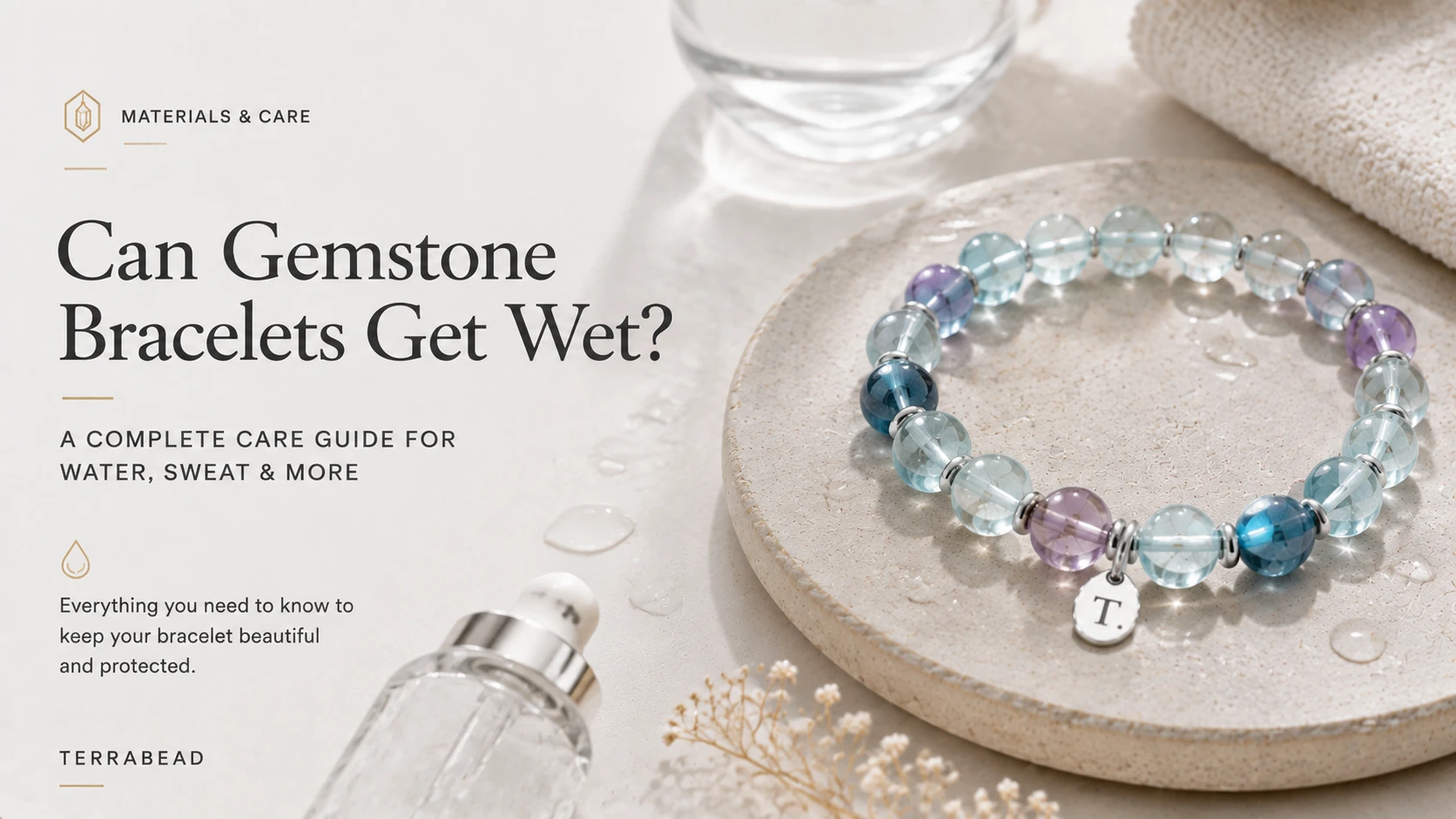
A splash of clean water and a long shower are not the same kind of exposure. Many durable gemstone materials can tolerate gentle cleaning with water when appropriate, but a finished bracelet is more than the stone alone.
The Short Answer: Occasional Contact Is Different From Repeated Soaking
A splash of clean water and a long shower are not the same kind of exposure. Many durable gemstone materials can tolerate gentle cleaning with water when appropriate, but a finished bracelet is more than the stone alone. It may also contain elastic cord, plated or finished metal components, jump rings, adhesives or beads with treatments that are not obvious from appearance.
That means the safest care advice should consider the complete object. Even when the gemstone itself is stable in water, repeated soaking can place unnecessary stress on the materials that hold the bracelet together or change the appearance of surface finishes over time.
For TerraBead, the practical recommendation is simple: do not treat a natural gemstone bracelet as waterproof unless the exact materials and construction have been verified for that use.
Can You Shower With a Gemstone Bracelet?
It is better to remove the bracelet before showering. The main concern is not only water. Shampoo, body wash, conditioner, skincare products and cleaning agents can leave residues on beads and metal components. Repeated cycles of wetting and drying can also be harder on elastic construction than normal dry wear.
A bracelet designed for everyday jewelry use does not need to remain on the wrist through every activity. Taking it off before bathing is a small habit that reduces avoidable exposure and keeps care simple.
What About Swimming Pools and the Ocean?
Swimming adds conditions that are more aggressive than a brief splash of clean water. Pool water contains disinfecting chemicals, while seawater contains salt. Both environments also involve longer periods of immersion, movement and temperature changes.
For a mixed-material gemstone bracelet, removing it before swimming is the more conservative choice. This protects not only the stones but also metal finishes, elastic and connector hardware.
There is also a practical reason: an elastic bracelet can be easier to lose in water, especially when the wrist is wet or cold.
Water Is Only One Part of the Exposure
The substances carried by water are often more important than the water itself. Soap, perfume, sunscreen, lotion, hair products, household cleaners and chlorine can all come into contact with jewelry during normal routines.
Some residues reduce surface brilliance and make transparent beads look cloudy or dull until they are cleaned. Chemicals can also interact differently with porous, treated or coated materials and with various metal finishes.
A useful rule is to put jewelry on after skincare, fragrance and styling products have been applied and allowed to dry.
Not Every Gemstone Has the Same Care Requirements
The word gemstone describes a very broad group of materials. Quartz varieties such as amethyst, citrine and clear quartz have different physical characteristics from porous or organic gem materials, and treatments can also change the way a material should be cleaned.
For that reason, a general article should never imply that every gemstone can be treated the same way. Material-specific care guidance should take priority whenever a stone is known to be porous, filled, coated, dyed or otherwise treated.
TerraBead’s care system should connect each product or gemstone page to the most specific verified instructions available for that material.
Why Elastic Deserves Its Own Care
Elastic construction is convenient because it allows a bracelet to move easily on and off the wrist, but it is still a working component. Repeated exposure to water, heat, chemicals and unnecessary stretching can shorten the useful life of an elastic bracelet.
The best habit is to roll the bracelet gently over the hand instead of pulling it open as far as possible. Keep it away from prolonged moisture and high heat, and store it in a relaxed circular shape rather than under tension.
If the elastic begins to feel unusually loose, frayed or inconsistent, stop wearing the bracelet until it can be inspected or restrung.
What to Do If Your Bracelet Gets Wet
Accidental water contact does not require panic. For most everyday situations, remove the bracelet and gently blot it with a clean, soft cloth. Allow it to air-dry fully at room temperature before storing it.
Avoid using a hair dryer, radiator or other direct heat source to speed the process. Heat can be inappropriate for some gemstones, treatments, elastic materials or finishes.
If the bracelet has been exposed to salt water, chlorine, cosmetics or another substance rather than plain water, follow the material-specific care instructions before attempting more intensive cleaning.
A Simple Everyday Water-Care Routine
The easiest care routine is based on prevention rather than frequent deep cleaning.
· Remove the bracelet before showering, swimming or soaking in water.
· Apply perfume, sunscreen, lotion and hair products before putting jewelry on.
· After accidental contact with clean water, blot gently and allow the bracelet to dry fully at room temperature.
· Avoid direct heat as a drying method.
· Follow material-specific guidance whenever a gemstone or finish has special care requirements.
· Check elastic and connectors periodically for visible wear.
Frequently Asked Questions
Can I wash my hands while wearing a gemstone bracelet?
Brief accidental contact is different from prolonged soaking, but removing the bracelet before repeated washing helps reduce exposure to soap, sanitizer and moisture. If it gets wet, blot it gently and let it dry fully.
Can I shower with clear quartz or amethyst?
The gemstone itself may tolerate gentle water-based cleaning when appropriate, but a bracelet also includes elastic and metal components. For routine wear, removing the finished bracelet before showering is the simpler and more conservative care choice.
Can I swim in a gemstone bracelet?
It is better not to. Chlorinated pool water and salt water create longer and more chemically complex exposure than ordinary clean water, and the bracelet can also be easier to lose while swimming.
What should I do if my bracelet gets wet in the rain?
Blot it with a soft cloth and let it air-dry completely before storage. Avoid high heat.
Are all natural gemstones water-safe?
No single rule applies to every gemstone. Porosity, treatments, coatings, inclusions and construction can all change appropriate care, so material-specific guidance should be followed.
Does water damage elastic bracelets?
Occasional contact does not automatically mean failure, but repeated moisture, heat, chemicals and stretching can contribute to wear. Keeping elastic jewelry dry when practical is a useful longevity habit.
Design It Your Way
Start with these ideas and build a bracelet that feels like you in TerraBead Design Studio.