
Clear Quartz: Clarity, Inclusions, Care & Bracelet Design
Clear quartz brings lightness and visual clarity to bracelet design. Learn how natural variation appears in clear quartz beads, how to pair them with color, and how to care for them over time.
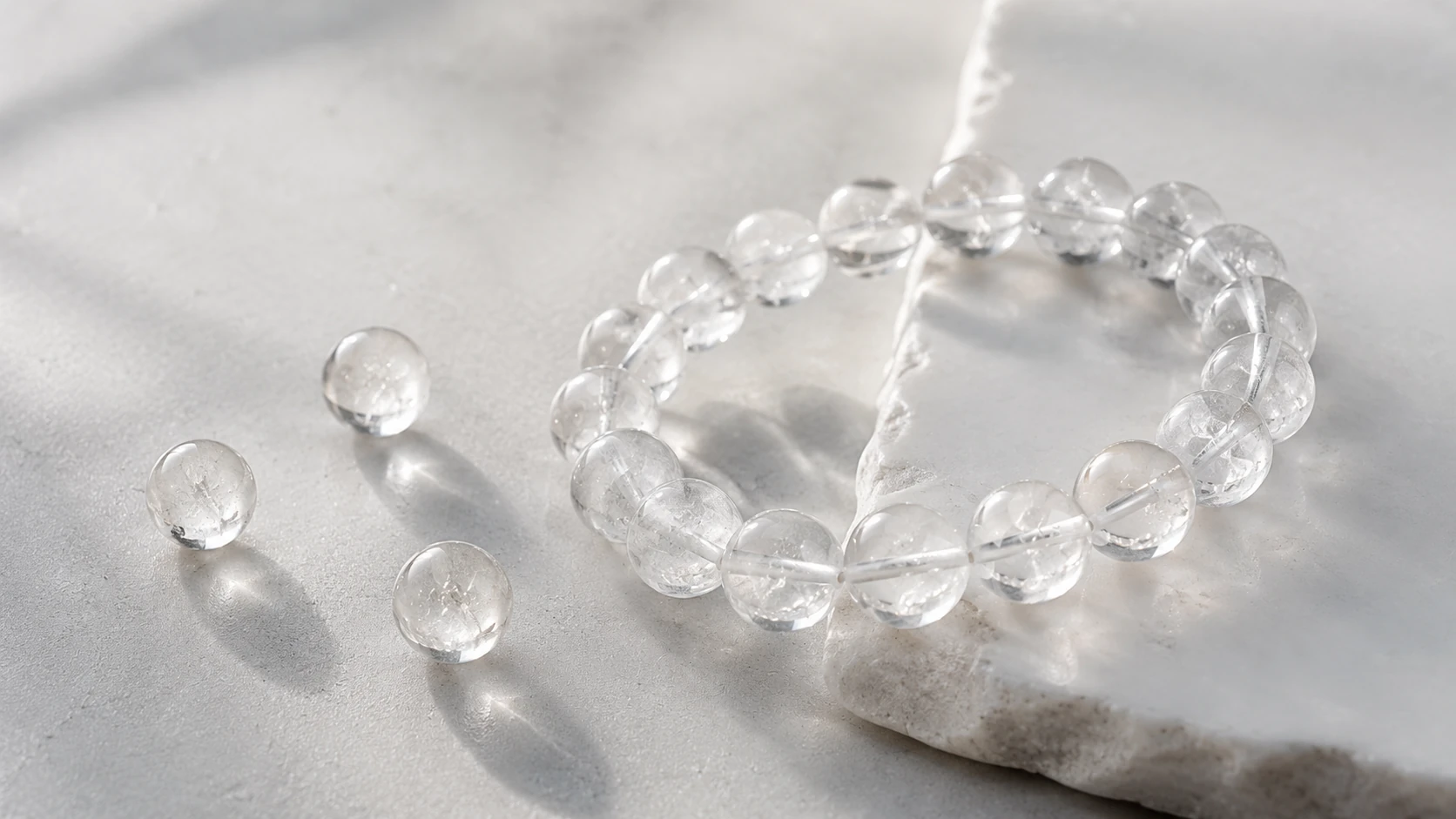
Clear quartz is the colorless form of crystalline quartz. In jewelry, transparent material is often referred to as rock crystal. Its appeal comes from a simple visual quality: it interacts strongly with light without int
What Is Clear Quartz?
Clear quartz is the colorless form of crystalline quartz. In jewelry, transparent material is often referred to as rock crystal. Its appeal comes from a simple visual quality: it interacts strongly with light without introducing a dominant color of its own.
That neutrality makes clear quartz particularly useful in bracelet design. It can create pauses between stronger colors, brighten a darker palette, soften a multicolor composition or let metal details become more visible. Because the stone is transparent to translucent, it can also make a bracelet feel lighter even when the bead size stays the same.
Why Does Clear Quartz Look Different From Bead to Bead?
“Clear” does not mean every bead should look identical. Natural quartz can contain internal growth features, tiny fractures, cloudy areas, fluid or mineral inclusions and differences in transparency. Some beads may appear almost glass-like, while others look softer or slightly misted.
For TerraBead, those differences should be shown rather than edited away. A useful product image should represent a realistic range within the material so customers understand that natural variation is expected.
Clarity: From Glass-Like to Softly Clouded
Clarity changes how a clear quartz bracelet reflects light. Highly transparent beads create sharp highlights and a crisp look. Slightly clouded beads diffuse light and can feel softer, quieter and more organic.
Neither appearance is automatically “better” for design. A very clean bead can support a minimal bracelet, while a bead with visible internal character can add texture to an otherwise simple composition.
Inclusions and Internal Features
Natural inclusions are part of the visual language of quartz. They can appear as wispy veils, fine internal lines, cloudy zones, reflective planes or small mineral features. In a round bead, these details may become more noticeable as the bracelet moves because the curved surface changes how light passes through the stone.
These internal features are different from obvious surface damage. Product quality review should distinguish natural internal characteristics from chips, deep scratches or poor polishing.
How Bead Size Changes the Look
Clear quartz responds strongly to scale. Smaller beads tend to read as delicate points of light. Medium beads create a balanced everyday proportion. Larger beads make transparency, internal features and reflections much more visible.
When designing in TerraBead Design Studio, compare the bead size not only by diameter but also by visual weight. A 12mm or 14mm clear bead may feel more prominent than its lack of color suggests because it reflects a larger area of light.
Colors That Pair Well With Clear Quartz
Clear quartz works with almost any palette because it does not compete strongly with neighboring colors. With amethyst, it creates a clean purple-and-clear rhythm. With aquamarine, it keeps a blue palette airy. With black agate or smoky quartz, it increases contrast. With citrine or tiger eye, it can separate warmer tones and prevent the bracelet from feeling visually heavy.
For multicolor designs, clear quartz is especially useful as a transition bead between colors that might otherwise feel abrupt next to one another.
Gold or Silver With Clear Quartz?
Both work well, but they change the mood. Gold-toned details bring warmth and visible contrast to a colorless stone. Silver-toned details create a cooler, more seamless look. If the bracelet contains several colored gemstones, choose the metal based on the overall palette rather than clear quartz alone.
How to Care for Clear Quartz Bracelets
For routine care, wipe the beads and metal components with a soft, dry cloth after wear. If deeper cleaning is needed, use a small amount of mild soap with lukewarm water only when the bracelet construction and metal components are suitable for it, then dry thoroughly.
Avoid harsh chemicals, prolonged soaking, extreme heat and hard impact. Store the bracelet separately from harder or sharp-edged jewelry that could scratch polished surfaces or damage metal details.
Frequently Asked Questions
Is clear quartz always perfectly transparent?
No. Natural clear quartz can range from highly transparent to slightly cloudy or veiled. Internal features and small variations are normal.
Why does one clear quartz bead look cloudier than another?
Natural growth features, tiny internal fractures, fluid or mineral inclusions and differences in transparency can change how each bead transmits light.
What colors look best with clear quartz?
It is highly flexible. Amethyst, aquamarine, citrine, smoky quartz, black agate and multicolor combinations all work well depending on the intended contrast.
Does clear quartz work with both gold and silver?
Yes. Gold creates a warmer contrast; silver keeps the palette cooler and more minimal.
What bead size should I choose?
Choose by proportion and visual weight. Smaller beads feel lighter and more delicate; larger beads make transparency and natural internal detail more prominent.
How should I clean a clear quartz bracelet?
Use gentle care: wipe with a soft cloth, avoid harsh chemicals and prolonged soaking, and follow the care requirements of the bracelet cord and metal components.
Design It Your Way
Start with these ideas and build a bracelet that feels like you in TerraBead Design Studio.