
Citrine: Color, Natural Variation, Care & Bracelet Design
Citrine brings yellow, honey and orange warmth into gemstone bracelet design. Learn how color varies, why treatment transparency matters and how to balance citrine with other stones.
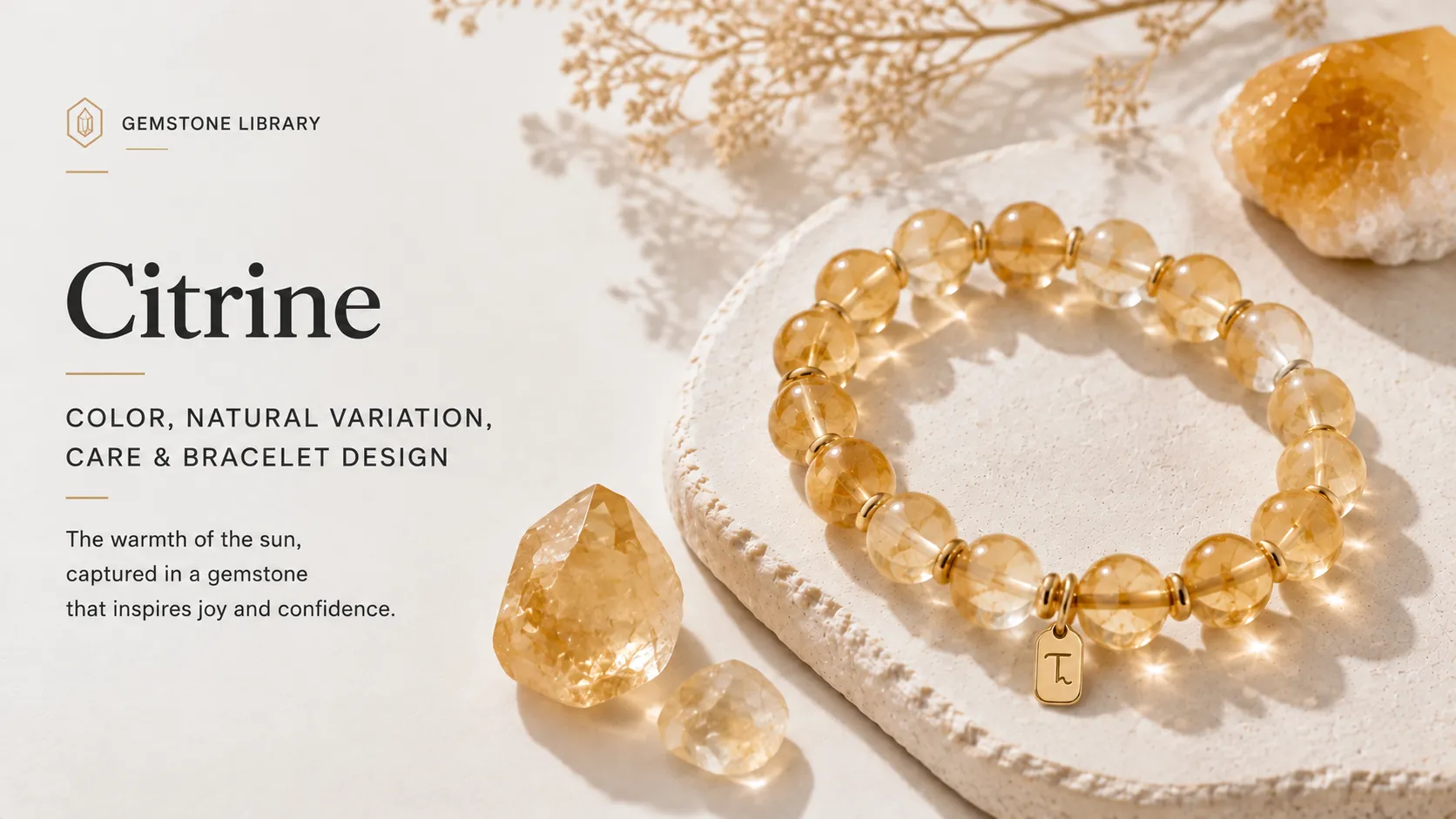
Citrine is the yellow-to-orange variety of quartz used in jewelry. Its color can range from a very light, almost champagne yellow to honey, amber-like and brownish orange tones.
What Is Citrine?
Citrine is the yellow-to-orange variety of quartz used in jewelry. Its color can range from a very light, almost champagne yellow to honey, amber-like and brownish orange tones.
Because the color sits in the warm part of the palette, citrine can change the emotional temperature of a bracelet very quickly. Even a small number of citrine beads can make a clear, blue or neutral design feel warmer.
Why Citrine Color Varies So Much
Citrine does not have one universal shade. Color depth, hue and brownish or reddish components can differ between materials and between individual beads. Lighting also matters: warm indoor light can intensify orange tones, while cooler daylight may make the same bead look more yellow or neutral.
For TerraBead product photography, consistent lighting is important so customers can compare materials without confusing photographic warmth with the actual gemstone color.
Natural Citrine and Heat-Treated Material
Natural-color citrine is rare compared with many other quartz varieties. In the gem trade, heating certain amethyst material is a common way to produce citrine color. Heat treatment is an established gemstone treatment, but it should be described accurately when treatment information is known.
TerraBead should not use “natural citrine” as shorthand for untreated material. “Natural gemstone” can describe the underlying mineral, while treatment status is a separate fact that requires supplier documentation or testing.
Clarity and Internal Character
Citrine can appear very clean and transparent, but bead material may still show internal veils, cloudy zones, small fractures or differences in clarity. Round beads can amplify these features because light passes through the curved surface from many angles.
In design, a slightly included citrine bead can look softer and more organic than a very clean bead. The right choice depends on the visual direction rather than on a single idea of perfection.
How to Use Citrine in Bracelet Design
Citrine is effective as both a main color and an accent. A mostly citrine bracelet feels warm and graphic. A mixed bracelet can use citrine as a highlight between clear quartz, smoky quartz, tiger eye or darker stones.
For a lighter palette, combine pale citrine with clear or milk-white materials. For more contrast, place citrine next to black agate or smoky quartz. For a multicolor design, use citrine as the warm counterpoint to aquamarine or green-toned stones.
Gold or Silver With Citrine?
Gold-toned metal reinforces citrine’s warmth and creates a continuous golden palette. Silver-toned metal introduces contrast and can make yellow beads feel more contemporary and less tonal. A mixed bracelet can also use metal choice to control whether the final design feels warmer or more neutral.
How Bead Size Changes Citrine
With smaller citrine beads, the color reads as a sequence of small warm points. Larger beads make the internal color zoning and transparency more visible. Because warm colors can feel visually prominent, increasing bead size often makes citrine appear stronger than the same number of clear or pale beads.
How to Care for Citrine Bracelets
Clean citrine gently and avoid harsh chemicals, strong impact and extreme heat. Wipe the bracelet with a soft dry cloth after wear. If the complete bracelet construction is suitable for wet cleaning, use lukewarm water with mild soap and dry the piece thoroughly.
Storage matters as much as cleaning. Keep the bracelet away from sharp jewelry edges and avoid crushing or stretching the bracelet under heavy objects.
Frequently Asked Questions
What color is citrine?
Citrine ranges from pale yellow through honey and golden tones to brownish orange.
Is all citrine naturally that color?
No. Natural-color citrine exists, but heat-treated amethyst is also common in the gem trade. Treatment status should be described when known.
Why do citrine beads look different in different light?
Warm and cool light sources can change how yellow and orange tones are perceived, especially in transparent material.
What stones pair well with citrine?
Clear quartz, smoky quartz, tiger eye, black agate, aquamarine and neutral white materials all create different levels of contrast.
Does citrine work with silver?
Yes. Gold makes the design warmer; silver creates a cooler contrast and a more contemporary balance.
How should I clean citrine beads?
Use gentle care, avoid harsh chemicals and extreme heat, and follow the requirements of the full bracelet construction.
Design It Your Way
Start with these ideas and build a bracelet that feels like you in TerraBead Design Studio.