
Aquamarine: Color, Clarity, Care & Bracelet Design
Aquamarine ranges from greenish blue to blue and can shift from crisp transparency to softer, included material in bead form. Learn how to use its cool color in bracelet design.
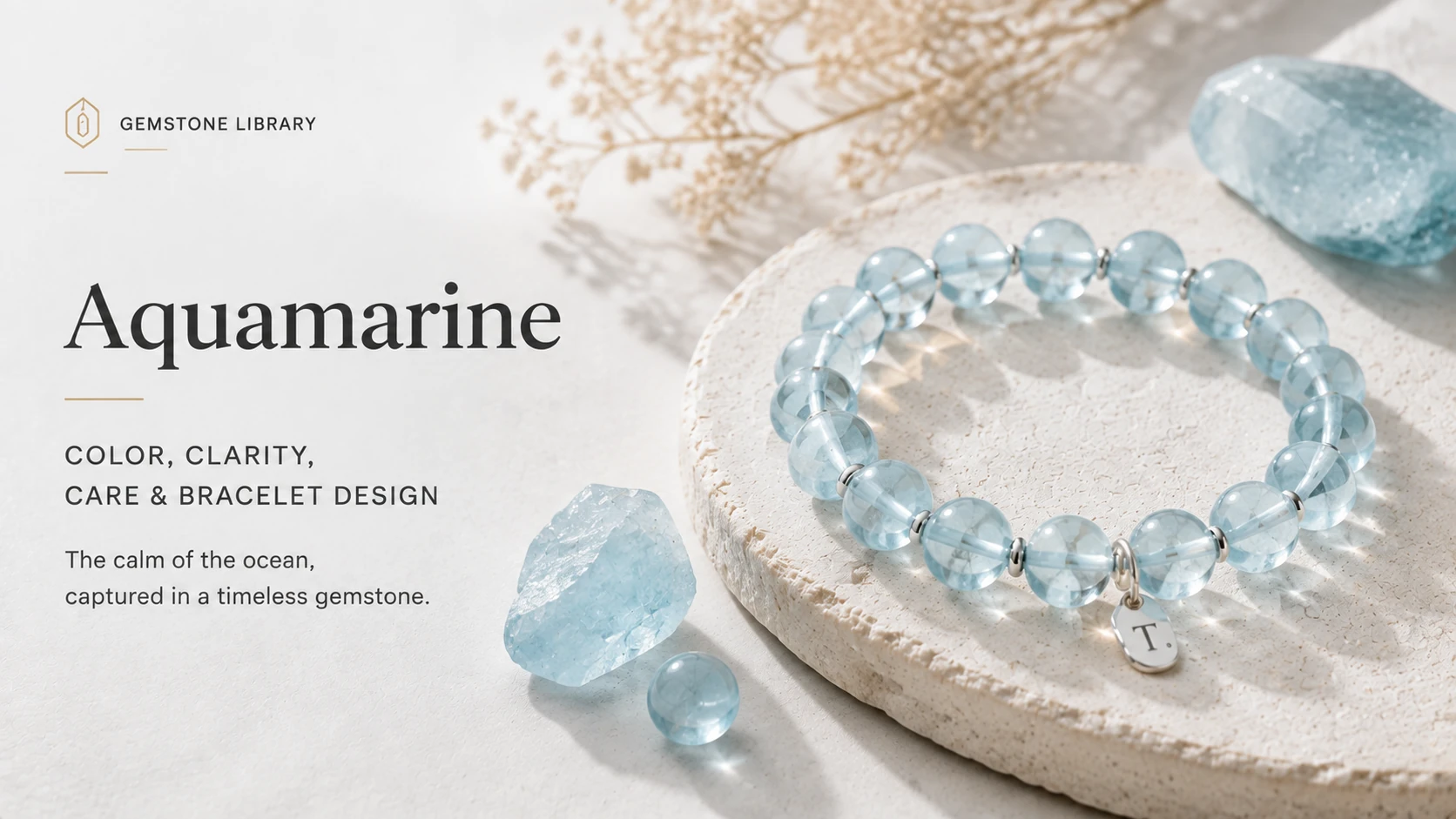
Aquamarine is the blue to green-blue member of the beryl mineral family. Its color is usually lighter and more open than many saturated blue gemstones, which gives it a calm, airy presence in jewelry design.
What Is Aquamarine?
Aquamarine is the blue to green-blue member of the beryl mineral family. Its color is usually lighter and more open than many saturated blue gemstones, which gives it a calm, airy presence in jewelry design.
In bracelets, aquamarine works especially well when the design needs color without visual heaviness. It can stand on its own in a monochromatic bracelet or act as a cool bridge between clear, white, gray and green materials.
Aquamarine Color: Blue, Greenish Blue and Everything Between
Aquamarine does not exist in one fixed blue. Some beads lean toward pale sea-blue, some show a more greenish tone, and others appear stronger blue depending on the material, lighting and treatment history.
Color can also look different against skin, fabric and neighboring gemstones. A pale aquamarine bead may look almost colorless next to deep amethyst, but noticeably blue beside milk quartz or warm citrine.
Clarity in Aquamarine Beads
Fine faceted aquamarine is often known for high transparency, but bead material can show a wider range of clarity. Some beads are clean and glass-like; others may contain visible internal features, liquid inclusions, mineral inclusions or soft cloudy areas.
For bracelet design, included material can be visually useful. It creates more texture and makes the stone feel less formal. The goal should be to describe the actual bead quality honestly rather than judge every visible inclusion as a flaw.
Why Natural Aquamarine Beads Can Look Uneven
Round beads are cut from pieces of rough that may not be uniform in color or clarity. As a result, one strand can include subtle differences in saturation, transparency and internal structure. The curved bead surface also magnifies and refracts internal features differently from one viewing angle to another.
When photographing aquamarine for TerraBead, multiple representative beads are more informative than one idealized sample.
How Aquamarine Works in Bracelet Design
Aquamarine naturally supports light, cool palettes. Pair it with clear quartz for maximum brightness, milk quartz for a softer look, or smoky quartz for more depth. Small gold spacers can introduce warmth without changing the overall cool identity of the bracelet.
It also works in multicolor designs where blue is used as a visual reset between warmer tones. Because the color is often subtle, repeating aquamarine at intervals can create rhythm without dominating the whole design.
Gold or Silver With Aquamarine?
Silver-toned metal reinforces aquamarine’s cool character and creates a clean, quiet palette. Gold-toned metal adds warmth and makes pale blue beads feel more luminous by contrast. Both approaches are valid; the better choice depends on whether the design should feel cool and minimal or warmer and more expressive.
Aquamarine and Treatment Transparency
In the gemstone market, heat treatment is commonly used to reduce greenish tones and produce a more blue appearance. That does not make the material unsuitable for jewelry, but treatment information should be stated accurately when it is known and relevant to the purchase decision.
TerraBead should avoid making “untreated” claims unless supplier documentation or testing supports them.
How to Care for Aquamarine Bracelets
Keep aquamarine away from unnecessary heat exposure, harsh chemicals and hard knocks. For normal care, wipe the bracelet with a soft cloth after wear. When the bracelet construction allows wet cleaning, use lukewarm water and mild soap, then rinse carefully and dry completely.
Because a bracelet combines gemstone beads, cord and metal components, care instructions should follow the most sensitive component in the finished piece rather than the stone alone.
Frequently Asked Questions
Is aquamarine always bright blue?
No. Aquamarine naturally ranges from greenish blue to blue, and bead material may be pale, softly colored or more saturated.
Why are some aquamarine beads cloudy?
Bead material can contain internal inclusions, liquid features or areas of lower transparency. These can create a softer appearance.
Is aquamarine heat-treated?
Heat treatment is common in the gem trade to reduce greenish tones and create a more blue appearance. Treatment status should be disclosed when it is known.
What gemstones pair well with aquamarine?
Clear quartz, milk quartz, smoky quartz, white materials and selected green or warm accent stones can all work well.
Does aquamarine look better with gold or silver?
Silver emphasizes a cool, minimal look. Gold introduces warmth and stronger contrast.
How should I care for an aquamarine bracelet?
Avoid harsh chemicals, unnecessary heat and hard impact. Clean gently and consider the cord and metal components as part of the care routine.
Design It Your Way
Start with these ideas and build a bracelet that feels like you in TerraBead Design Studio.