
Amethyst: Color, Inclusions, Care & Bracelet Design
A practical guide to natural amethyst—its color, inclusions, bead variation, care, and how to use it thoughtfully in bracelet design.
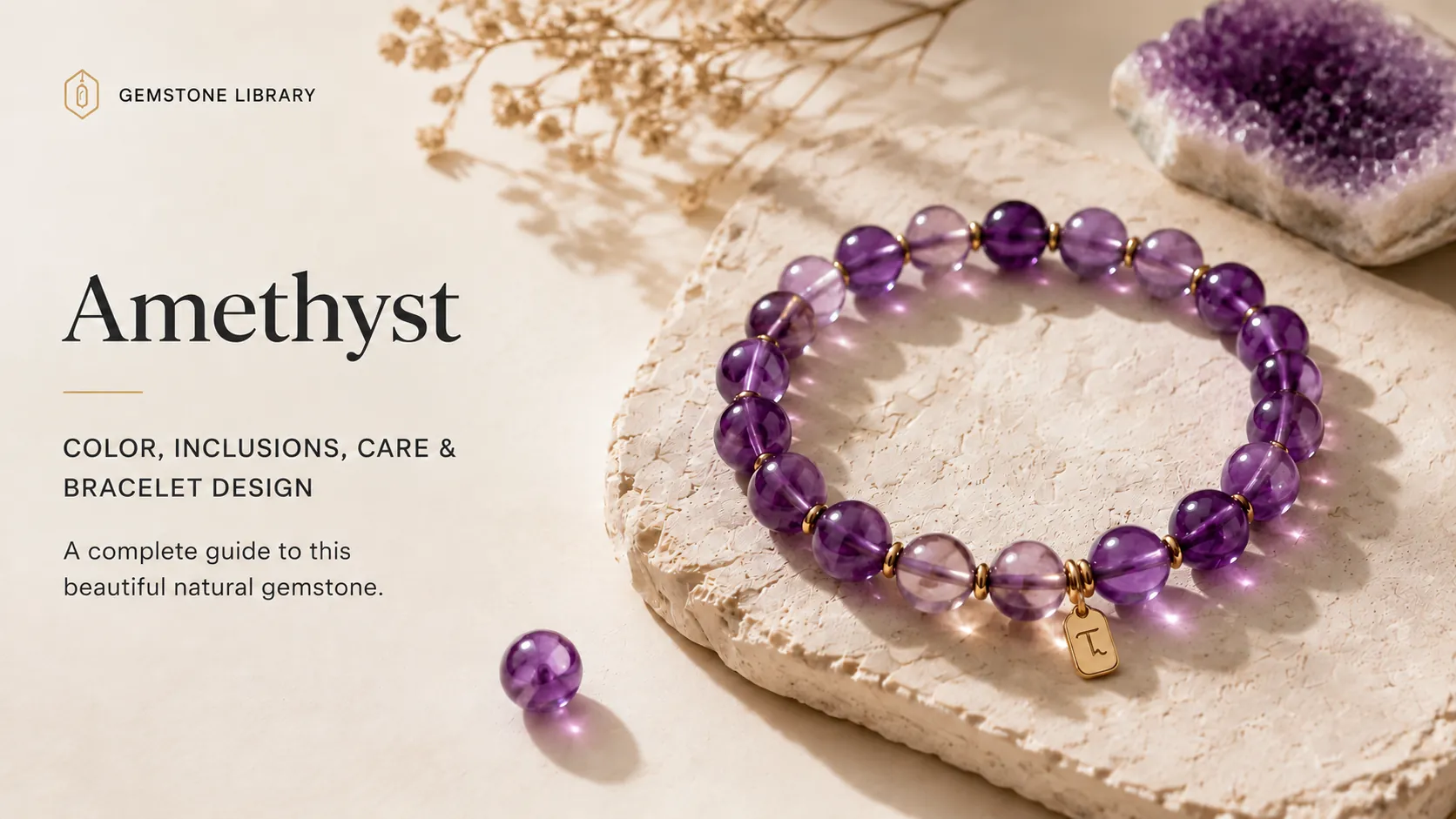
Amethyst is the purple variety of quartz. Natural amethyst beads can range from pale lavender to deep violet and may show color zoning, internal veils, small fractures, or cloudy areas. These differences are normal chara
Amethyst is the purple variety of quartz. Natural amethyst beads can range from pale lavender to deep violet and may show color zoning, internal veils, small fractures, or cloudy areas. These differences are normal characteristics of natural stone and are one reason every finished bracelet looks slightly different.
Property | Guidance |
Mineral family | Quartz |
Typical color | Pale lavender to deep violet |
Transparency | Transparent to translucent |
Common natural features | Color zoning, veils, internal fractures, cloudy areas |
Common bracelet sizes | 6mm–14mm |
Best design role | Main color, gradient, contrast accent |
Metal direction | Gold for warmth; silver for a cooler look |
What Is Amethyst?
Amethyst is a naturally occurring purple variety of quartz, one of the most familiar mineral families used in jewelry. Its purple color can appear soft and misty, vivid and saturated, or somewhere in between. In bead form, the visual impression is shaped not only by color but also by transparency, internal structure, polish, lighting, and the way neighboring beads influence one another.
For bracelet design, this means “amethyst” is not a single flat purple. A strand may contain beads that lean pink-lilac, cool violet, smoky purple, or nearly colorless at the edges. That range can be used intentionally rather than treated as a defect.
Why Do Amethyst Beads Look Different from One Another?
Natural gemstone beads are cut from larger pieces of mineral material. Even when beads are selected to the same nominal diameter, the material inside each sphere is different. One bead may be clearer, another may contain a fine veil, and another may show stronger color in one half than the other.
In a finished bracelet, small variations usually create more depth than perfectly uniform synthetic color would. At TerraBead, we recommend treating those differences as part of the material language: repeat colors where you want rhythm, and let individual inclusions create quiet points of interest.
[Suggested Rich Media Module: use original TerraBead gemstone/bead photography, comparison images, or a simple process diagram.]
Color, Clarity & Natural Inclusions
Amethyst can look transparent, translucent, or slightly cloudy. Color may be evenly distributed, concentrated in bands, or stronger in one part of a bead. Fine internal lines, soft clouds, and small healed fractures may also be visible under close light.
Clarity alone does not determine whether an amethyst bead is visually appealing. For a minimalist bracelet, clearer beads can feel lighter and more precise. For a more organic design, visible inclusions and tonal variation can add texture and make the material feel more distinctly natural.
How Amethyst Changes in Different Light
Amethyst often appears different under daylight, warm indoor lighting, and direct phone flash. Cool daylight tends to reveal violet and blue-purple notes, while warm interior light can shift the stone toward a softer plum or rosy tone. Reflections from skin, clothing, metal spacers, and surrounding stones also influence how the color reads.
When evaluating a bracelet design online, look at more than one photo when possible. A single image cannot capture every lighting condition, and natural gemstones rarely look identical in all environments.
How to Design with Amethyst
Amethyst can work as a full-strand color, a gradient, a repeating accent, or a single focal bead. The most important decision is whether you want the bracelet to feel quiet, tonal, or high-contrast.
A restrained combination might use amethyst with clear quartz and milk quartz. A warmer palette can add citrine or gold-toned spacers. For stronger contrast, black agate or smoky quartz can anchor the purple and give the bracelet a more graphic appearance.
What Colors Pair Well with Amethyst?
White and clear stones make purple feel cleaner and brighter. Smoky brown tones make it feel more grounded. Pale blue creates a cooler, airy palette, while yellow and gold accents create a complementary warm contrast. Black introduces the strongest visual separation.
The best pairing is not a fixed rule; it depends on the atmosphere you want the bracelet to carry. Start with one dominant color, add one supporting tone, then decide whether a third material adds depth or unnecessary noise.
Gold or Silver with Amethyst?
Gold-toned metal adds warmth and can make violet appear richer or slightly more luxurious. Silver-toned metal emphasizes cooler notes and creates a cleaner, more modern contrast. Both work well; the choice should follow the rest of your wardrobe and the overall color temperature of the bracelet.
For a minimal design, use metal sparingly. A few consistent spacers or one TerraBead tag can be enough to establish the finish without interrupting the natural stone.
How to Care for an Amethyst Bracelet
For routine care, wipe the bracelet with a soft, clean cloth after wear. If deeper cleaning is needed, use a small amount of lukewarm water and mild soap, then rinse carefully and dry completely. Avoid prolonged soaking, harsh household chemicals, perfume, chlorine, and repeated exposure to salt water—especially because a bracelet also contains stringing material and metal components, not only stone.
Store the bracelet separately from harder or sharp jewelry that may scratch polished surfaces or damage the elastic. Avoid leaving gemstone jewelry for long periods in intense direct sunlight or high heat.
Frequently Asked Questions
Is every amethyst bead the same color?
No. Natural amethyst can vary from pale lavender to deeper violet, even within the same strand.
Why does some amethyst look cloudy?
Cloudiness may come from natural internal features such as veils, inclusions, or tiny healed fractures.
Is darker amethyst always better?
Not necessarily. Color preference is subjective, and lighter material can be especially useful in soft or tonal bracelet designs.
What stones pair well with amethyst?
Clear quartz, milk quartz, smoky quartz, citrine, black agate, and pale blue stones can all create distinct design directions.
Can I wear an amethyst bracelet every day?
Yes, with normal jewelry care. Remove it for swimming, chemical exposure, heavy exercise, or activities that may snag or impact the bracelet.
Design It Your Way
Start with these ideas and build a bracelet that feels like you in TerraBead Design Studio.