
How to Choose the Right Bead Size for a Bracelet
A visual and practical guide to choosing gemstone bead size based on wrist scale, comfort, visual weight, and design intention.
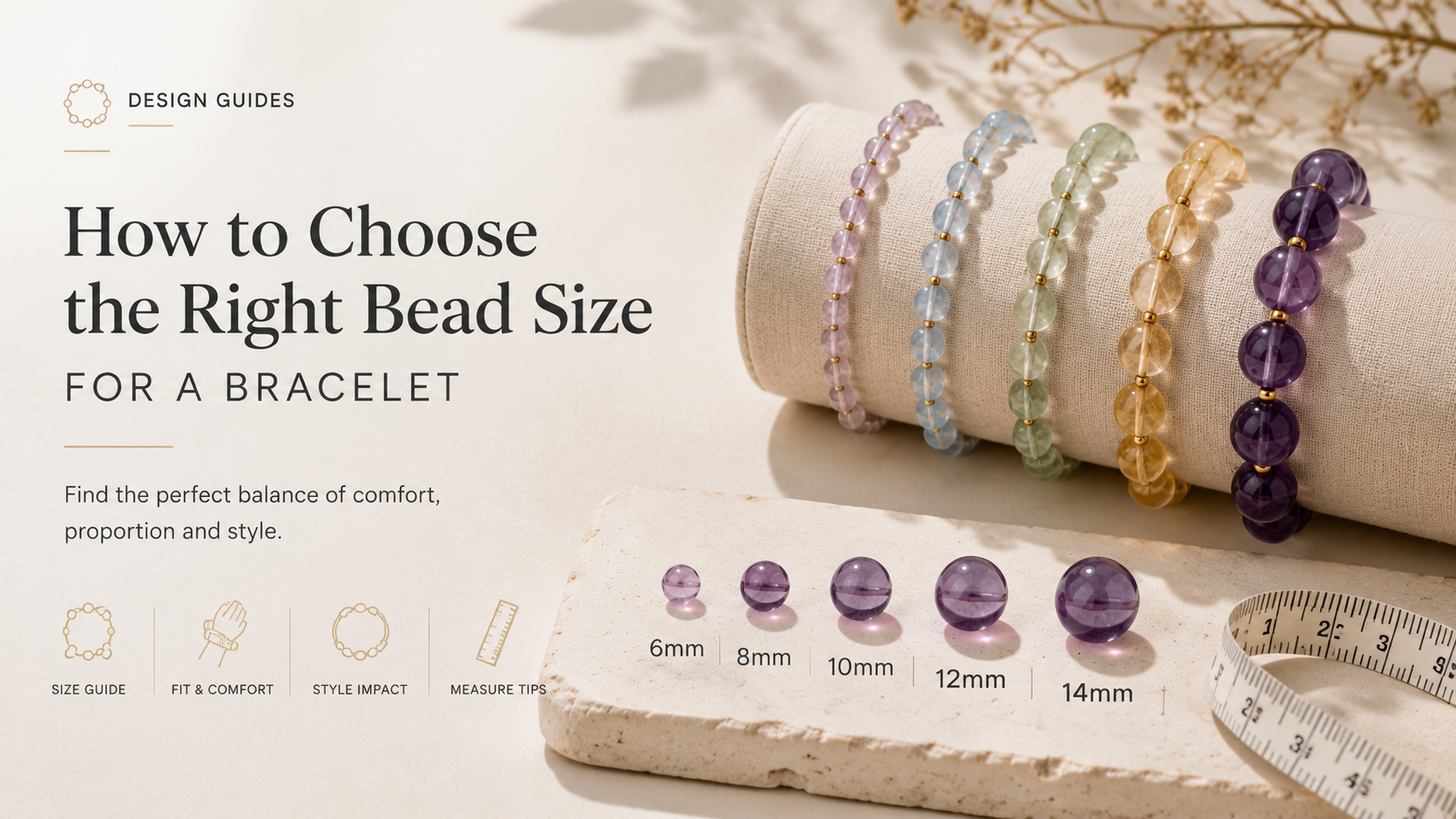
Bead size changes the entire character of a bracelet. Smaller beads such as 6mm feel light and understated, 8mm is a versatile everyday scale, 10mm creates more visual presence, and 12mm or larger beads become a strong d
Bead size changes the entire character of a bracelet. Smaller beads such as 6mm feel light and understated, 8mm is a versatile everyday scale, 10mm creates more visual presence, and 12mm or larger beads become a strong design statement. The best size depends on wrist proportion, comfort, and how much visual weight you want the bracelet to carry.
Property | Guidance |
6mm | Light, subtle, layered |
8mm | Balanced, versatile, everyday |
10mm | Visible, substantial, design-led |
12mm | Bold, sculptural, statement |
14mm | Maximum visual impact, fewer beads per bracelet |
Why Bead Size Matters
When two bracelets use the same stone and the same color palette, bead size can still make them feel completely different. Small beads create more repetition around the wrist and usually read as finer and quieter. Larger beads reduce the number of visible units and make each individual stone more important.
Bead size also changes how much natural texture you can see. Inclusions, color zoning, chatoyancy, and internal structure are easier to notice in larger beads because each surface carries more visual information.
6mm Beads: Light and Refined
6mm beads are a good choice when you prefer a delicate bracelet, want to stack several pieces, or want the color to act as a subtle detail rather than the main focus. Because more beads are needed to go around the wrist, the design can create a fine, continuous rhythm.
This size works especially well with pale colors, clear quartz, rose quartz, and mixed palettes where many small color changes are part of the design.
[Suggested Rich Media Module: use original TerraBead gemstone/bead photography, comparison images, or a simple process diagram.]
8mm Beads: The Most Versatile Starting Point
8mm is a balanced scale for many wrists and is often the easiest place to begin. It provides enough surface area to show natural material character while remaining comfortable and visually adaptable.
For a first TerraBead design, 8mm is a strong default because it works equally well for monochrome bracelets, two- or three-stone combinations, and both gold- and silver-toned details.
10mm Beads: More Presence, More Material
10mm beads make the bracelet visibly more substantial. The larger surface makes color, transparency, banding, and inclusions easier to appreciate. A 10mm bracelet can still be minimal, but the materials themselves become part of the statement.
If you choose multiple colors at this scale, keep the composition controlled. Too many materials can make the bracelet feel busy because each bead already carries significant visual weight.
12mm and 14mm Beads: Sculptural Scale
12mm and 14mm beads are best when you want the bracelet to act as a focal accessory. Fewer beads fit around the wrist, so each stone occupies more visual space and the bracelet often feels more architectural.
Large beads are particularly effective with stones that have strong optical character, such as tiger eye, rutilated quartz, dramatic agate, or richly colored amethyst.
Match Bead Size to Wrist Proportion
Wrist measurement matters, but proportion is not a strict formula. A smaller wrist can still wear large beads if the desired effect is bold, while a larger wrist can wear 6mm beads for a refined look. Think of bead size as styling rather than a rule based on body type.
What matters most is how the scale feels when viewed from normal conversation distance, not only in a close-up product image.
Think About Comfort and Movement
Larger beads create more thickness around the wrist and may feel more noticeable against a laptop edge, cuff, or desk surface. Smaller beads sit closer to the wrist and are easier to layer with a watch or other bracelets.
If you work at a keyboard throughout the day, an 8mm bracelet may be easier to wear than a large 12mm or 14mm design. If the bracelet is primarily for styling rather than all-day wear, larger beads may be exactly the right choice.
Use Mixed Sizes Intentionally
Mixing bead sizes can create hierarchy. For example, an 8mm bracelet can include one or three 10mm focal beads, or a 6mm composition can use a larger center stone to create a clear point of emphasis.
The key is repetition. If a larger size appears more than once, repeat it with a clear rhythm so it looks designed rather than accidental.
Frequently Asked Questions
What bead size is best for a first bracelet?
8mm is the most versatile starting point for many designs because it balances comfort, material visibility, and visual presence.
Are 10mm beads too large for everyday wear?
Not necessarily. Many people find 10mm comfortable, but the bracelet will feel more substantial than an 8mm design.
Do larger beads mean fewer beads in the bracelet?
Yes. As bead diameter increases, fewer beads are generally needed to create the same inner bracelet circumference.
Can I mix 8mm and 10mm beads?
Yes. Mixed sizes are useful for creating focal points, but repeat the larger size intentionally for visual balance.
Which bead size looks most minimal?
6mm usually feels the lightest and most discreet, while 8mm creates a slightly stronger but still restrained look.
Design It Your Way
Start with these ideas and build a bracelet that feels like you in TerraBead Design Studio.